 Retatrutide-Peptide.biz
 Written by Rhonda Patrick, PhD
 Reviewed by Fatima Cody Stanford, MD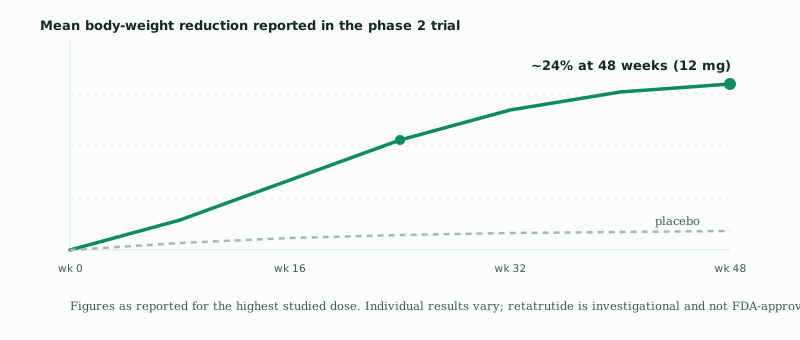
Most people searching for retatrutide results want a single thing: a realistic idea of how much weight this investigational peptide could help them lose, and how quickly. Retatrutide is an experimental, compounded triple-agonist medication that some telehealth providers supply under clinician supervision. It is not FDA-approved for weight management or any other indication, and the numbers below come from preliminary research, not guaranteed outcomes. Individual results vary widely, and this page is for educational purposes, not a promise of your personal experience.
Retatrutide is still investigational and can be obtained only through a licensed provider as a compounded product. It has not been approved by the FDA. Nothing here is medical advice, and no result is assured. Always speak with a qualified clinician about your full history and any medications before starting.
- Average reported body-weight reduction: up to about 24% at 48 weeks (highest dose, phase 2, as documented)
- Approximate half-life: roughly 6 days, supporting once-weekly dosing
- Elimination period: about 5 half-lives (around 30 days) after the last dose
- Mechanism: acts on three receptors (GLP-1, GIP, and glucagon)
How does retatrutide promote weight loss?
To understand retatrutide's results, it helps to understand its design. Unlike earlier medications that target one or two gut hormone pathways, retatrutide is a single molecule reported to activate three receptors at once: GLP-1, GIP, and glucagon. This 'triple agonist' mechanism is why researchers have been studying it, and it is central to the pharmacology behind it.
The triple-agonist mechanism
The GLP-1 and GIP effects are believed to suppress appetite, slow stomach emptying, and increase fullness after meals, so people often eat less without constant effort. The glucagon component is what sets it apart: glucagon-receptor activation may raise energy expenditure and support fat metabolism. In theory, this combination pairs lower caloric intake with a slight increase in calories burned.
Does retatrutide specifically reduce fat or also muscle?
A common concern is whether the weight lost comes from fat or lean tissue. Any rapid weight loss, whatever the method, can involve some muscle loss. The glucagon pathway is a reason researchers are exploring retatrutide's possible fat-specific effects, but this is still being investigated and not yet established. Adequate protein intake and resistance training are widely recommended to preserve muscle during weight loss, regardless of medication use. Discuss body-composition goals and the possible benefits with a qualified clinician.
Retatrutide clinical trials results
The most frequently cited retatrutide weight-loss outcomes come from a phase 2 randomized study in adults with obesity. As reported, those on the highest weekly 12 mg dose achieved an average body-weight reduction of nearly 24% at 48 weeks, with lower doses producing smaller average losses. These figures are averages from a controlled research setting and remain early-stage; larger, longer phase 3 trials are needed to confirm both effectiveness and long-term safety.
Study figures represent group averages under research conditions, including medical supervision and gradual dose adjustments. They are presented as published evidence, not as a prediction for you. Your outcome may be higher, lower, or negligible, as individual responses vary.
How to responsibly interpret trial data
A 'mean' reduction means some participants lost more and others considerably less. Averages also reflect those who tolerated the drug well enough to continue. When you encounter a headline percentage, view it as a best-case under ideal, supervised conditions, not a benchmark. This perspective matters when reading patient before-and-after reviews accounts, which are anecdotal and not a substitute for clinical data.
Retatrutide weight-loss timeline: what to expect week by week
There is no fixed schedule, but the table below outlines a typical, illustrative pattern of how a supervised regimen is often structured and what some individuals may notice. It is meant only as an example. Providers increase the dose gradually to improve tolerability, so early weeks focus on adjustment rather than rapid change. Individual outcomes differ, and some may see little effect until later or experience an earlier plateau.
| Timeframe | Typical focus | What some users report (varies) |
|---|---|---|
| Weeks 1-4 | Lowest initial dose; body adjusting | Experience reduced hunger and serve yourself smaller portions; the scale may show little to no movement at this point; early stomach upset is possible. |
| Weeks 5-8 | Raise the dose for the first time as directed by the clinician. | Feel satiated more frequently, and early indicators of gradual weight change may appear. |
| Weeks 9-16 | Keep increasing the dose step by step toward the target level. | Many notice a clearer and more consistent weekly reduction; day-to-day routines start to settle. |
| Months 4-6 | Are close to or have attained the target dose. | Often the most noticeable combined outcomes; a temporary plateau can arise for some. |
| Months 7-12 | Maintenance dose together with lifestyle guidance. | For some, change continues at a slower pace; the emphasis shifts to sustaining results. |
Weekly weight reduction associated with retatrutide therapy.
A frequent question is whether a dependable weekly number can be expected. In practice, weekly changes are uneven: minimal at first, faster during the middle titration phase, and easing off as the body adapts. Anchoring expectations to a specific weekly figure tends to bring frustration. A gradual, sustainable pace judged safe by a medical expert matters more than the reading from any single week, since that can shift with water, salt, and hormonal changes. Only your clinician sets and adjusts your weight-loss dose.
How soon do the effects of retatrutide begin, and how long do they take to appear?
Two commonly asked questions arise: how quickly does retatrutide take effect, and how long before it starts working. These differ. Appetite effects may be felt fairly soon, sometimes within the first couple of weeks, since the drug acts on appetite centers shortly after dosing begins. Visible weight changes, by contrast, usually lag and become more evident within the first two to four months as the dose is raised.
How long does retatrutide stay in the body?
Retatrutide's estimated half-life is about 6 days, which is why it is intended for once-a-week dosing. As a general rule, a medication is largely cleared after roughly five half-lives, so retatrutide may take around 30 days to be mostly eliminated after the final dose. This is an estimate; the actual duration varies with individual factors, and only a qualified medical provider can advise on timing for procedures, pregnancy considerations, or other drugs.
Why am I not losing weight on retatrutide?
A weight plateau or a modest response is common and does not automatically mean the treatment is not working. Weight loss seldom follows a straight line, and various ordinary factors can mask progress. Below are points to review with a qualified provider before drawing any conclusions.
What to assess with a medical professional
- Dose and titration stage: Early low doses are not expected to produce substantial loss; you may still be in the early phases.
- Adherence and timing: Missing doses or using it inconsistently each week blunts the effect.
- Calorie and protein intake: A smaller appetite only helps if it produces a sustained calorie deficit; calorie-containing drinks and larger portions can add up.
- Sleep and stress: Not enough sleep and high stress can slow progress.
- Fluctuations caused by water, sodium, and the menstrual cycle: These can mask fat loss on the scale for days or weeks.
- Medical factors: Thyroid issues, other medications, and certain medical conditions can affect results and require clinical review.
When a weight-loss plateau usually happens
As body weight drops, the body adjusts and metabolism shifts, so a short plateau following substantial early loss is typical. A qualified clinician may recommend changes, but you should never alter your dose by yourself to try to get faster results. Also, review any known risks and contraindications since how well you tolerate the medication can influence whether the plan can be continued as intended.
Realistic expectations and how lifestyle plays a role
Retatrutide for weight loss, when a healthcare provider considers it appropriate, should be viewed as a possible aid that supports nutrition, exercise, sleep, and consistency, rather than a replacement for them. People who achieve the most durable results in weight-management programs usually pair medication with sustainable habits. Because retatrutide is investigational and compounded, ongoing medical oversight is essential for safety and for correctly interpreting your own progress over time.
If you have severe or persistent symptoms, seek medical help immediately. Retatrutide is not appropriate for everyone; only a licensed clinician familiar with your medical history can determine eligibility, potential benefits, and risks.
Frequently asked questions
How soon does retatrutide begin to work?
Appetite changes may be noticed within the first few weeks, while noticeable weight changes usually become clearer over the first two to four months as the dose is gradually raised. This differs from person to person and is not guaranteed.
What were the retatrutide results in clinical trials?
In a phase 2 trial, the highest dose was linked to an average body weight reduction of up to about 24% at 48 weeks. These are group averages from early research carried out under medical supervision, not a prediction for any individual.
What is the half-life of retatrutide?
The estimated half-life is roughly 6 days, which means it may take about 30 days (approximately five half-lives) for the drug to be mostly eliminated after the last dose. Clearance differs between individuals; consult a qualified clinician for specific timing.
Does retatrutide burn fat?
Its activation of the glucagon receptor is one reason researchers are investigating its potential effects on energy expenditure and fat metabolism, but this remains under investigation. Sufficient protein intake and resistance training can help preserve muscle during any weight loss.
Why am I not losing weight on retatrutide?
Possible reasons include being early in the dose escalation, inconsistent dosing, an insufficient calorie deficit, sleep or stress issues, water weight fluctuations, or underlying medical conditions. Discuss these factors with a qualified clinician instead of adjusting the dose yourself.
Are these results guaranteed?
No. Retatrutide is investigational and not FDA-approved, and no specific outcome is guaranteed. Individual results vary, and all numbers presented here are from clinical research for educational purposes. For comparison with an approved dual agonist, see our head-to-head comparison with tirzepatide and keep in mind that a full month of treatment carries its own monthly price tag.
Sources & references
Claims of fact on this page are checked against the primary literature and regulators below. See our editorial standards.
- Jastreboff AM et al. Triple-Hormone-Receptor Agonist Retatrutide for Obesity: A Phase 2 Trial. New England Journal of Medicine 2023;389:514-526. View source
- Eli Lilly investor release: phase 3 TRIUMPH-1 topline weight-loss results. View source
- Eli Lilly investor release: two further phase 3 trials, weight and A1C results. View source
- ClinicalTrials.gov: TRIUMPH-1 (NCT05929066), phase 3 retatrutide trial in obesity or overweight. View source
- NIH / NIDDK: Prescription Medications to Treat Overweight & Obesity. View source