 Retatrutide-Peptide.biz
 Written by Nir Barzilai, MD
 Reviewed by Ania M. Jastreboff, MD, PhD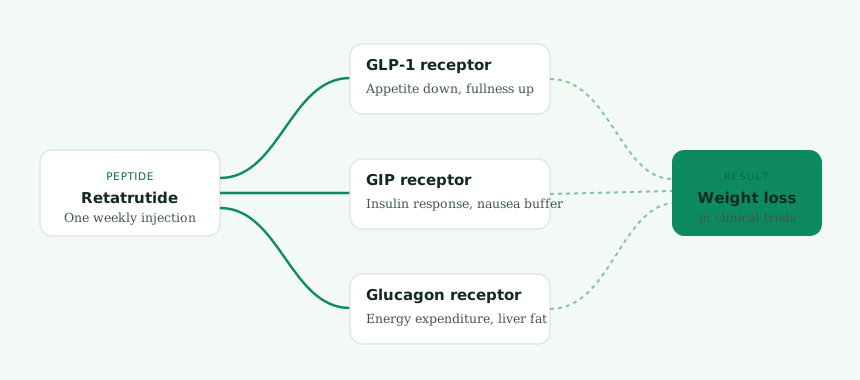
Searches for retatrutide diabetes have climbed because the same hormonal pathways behind weight loss are also key to glucose control. Retatrutide is an investigational compounded peptide, not FDA-approved for diabetes, weight loss, or any condition. In the U.S., it is available only through licensed prescribers and compounding pharmacies, and this content is not medical advice.
Quick orientation: Retatrutide acts on three receptors: GLP-1, GIP, and glucagon. Two are strongly associated with improved insulin response and lower blood glucose. Phase 2 trials enrolled adults with type 2 diabetes and reported notable A1c reductions. Retatrutide is not insulin, not established for type 1 diabetes, and has no approved role in diabetes care.
Investigational status matters especially here, since people with diabetes often take other glucose-lowering drugs, which changes risk. Any decision belongs with a clinician who knows your full medical history.
Does retatrutide reduce blood sugar? Insights from diabetes research.
Retatrutide is classified as a triple agonist a single molecule that binds to three receptors, each affecting metabolism in a distinct way. The role of each component explains why researchers expected glycemic effects, and why the third one initially appeared problematic.
The three receptor pathways
| Receptor pathway | Its metabolic actions | Expected effect on glucose |
|---|---|---|
| GLP-1 | Triggers glucose-dependent insulin release, lowers post-meal glucagon, slows gastric emptying, reduces appetite | Reduces both postprandial and fasting glucose |
| GIP | Second incretin signal; increases insulin secretion after meals, influences fat processing in adipose tissue | Supports insulin response; may indirectly improve sensitivity |
| Glucagon | Raises energy expenditure and mobilizes fat stores, including hepatic fat; on its own, stimulates glucose output from the liver | Alone raises glucose, but is counteracted in combination |
Why the glucagon component is paradoxical
Glucagon raises blood sugar when it drops, so adding a glucagon agonist to a weight-loss drug appears contradictory. The leading theory is that the two incretin arms dominate glucose regulation: the insulin-promoting effects of GLP-1 and GIP, plus substantial weight loss and reduced liver fat, seem to outweigh glucagon's tendency to raise glucose. In the phase 2 program, overall glycemic outcomes were favorable. This balance is a trial-level observation, not a guarantee for any individual, and long-term effects are still being studied.
Phase 2 findings on retatrutide and type 2 diabetes
A separate phase 2 trial enrolled adults with type 2 diabetes, not only obesity. That cohort experienced significant A1c reductions along with weight loss, with the largest effects generally at higher doses. We deliberately leave out percentage figures here because numbers shared on social media are often sourced incorrectly.
Comparison with approved medications
The key distinction is regulatory rather than purely pharmacological. Several GLP-1 medications are FDA-approved to treat type 2 diabetes and have years of outcome data. Retatrutide has none of that: no completed review, no approved diabetes labeling or dosing, no post-marketing surveillance.
Can diabetics take retatrutide?
Prescribing decisions rest solely with a clinician, and many may decline. A doctor considering it will need details on current medications, renal and hepatic function, A1c, hypoglycemia history, and home glucose monitoring capability. Retatrutide must never replace a prescribed diabetes medication, and patients should not stop or adjust existing prescriptions on their own.
Retatrutide and insulin resistance
Insulin resistance is when muscle, liver, and fat cells respond poorly to insulin, prompting the pancreas to secrete more to maintain glucose balance. It precedes type 2 diabetes.
Does retatrutide affect insulin resistance?
Markers such as fasting insulin were reported to improve, but the mechanism requires careful interpretation. Much of the benefit attributed to any incretin drug here likely comes from the weight loss itself (especially loss of visceral and liver fat) rather than a direct effect on insulin signaling in muscle. The glucagon component of retatrutide may help reduce hepatic fat, which is part of the broader effect metabolic benefits observed in studies. It remains uncertain whether this produces durable gains in insulin sensitivity beyond those attributable to weight loss by itself.
Retatrutide and type 1 diabetes
Type 1 diabetes is a separate condition: an autoimmune assault on the insulin-producing beta cells, leaving the body essentially unable to produce meaningful insulin. Incretin medications generally act by boosting secretion from working beta cells, a mechanism with little to act on when those cells are gone.
Retatrutide is not a substitute for insulin
Retatrutide has not been proven, extensively studied, or approved for type 1 diabetes. It cannot substitute for insulin therapy, and cutting back or halting insulin is dangerous and may result in diabetic ketoacidosis. On occasion, specialists may prescribe approved incretin drugs off-label for individuals with type 1 diabetes who also have obesity, under close medical supervision. That is not a scenario for a compounded investigational peptide.
Hypoglycemia warning. Retatrutide's effect on blood sugar is largely glucose-dependent, but when it is combined with insulin or a sulfonylurea (such as glipizide, glimepiride, or glyburide), the risk of low blood sugar increases substantially and can be severe. These medications frequently need dose adjustments, and only the prescribing clinician should make them. Know the warning signs (shakiness, sweating, confusion, palpitations), keep fast-acting carbohydrate within reach, and seek urgent care for severe episodes.
Monitoring, supervision, and the question "can retatrutide cause diabetes"
The overlap between retatrutide and diabetes management calls for closer supervision than weight-only use: most of the interaction risk lies with the other drugs in the regimen, not with retatrutide by itself.
Frequently asked questions
Is retatrutide approved for diabetes?
No. Retatrutide is investigational and is not FDA-approved for type 2 diabetes, type 1 diabetes, weight loss, or any other use. Compounded versions are dispensed only under the direction of a licensed prescriber.
Does retatrutide lower blood sugar in people without diabetes?
Reported trials in adults with obesity showed improvements in glucose-related measures, which largely tracked with weight loss. Because the incretin effect is glucose-dependent, symptomatic low blood sugar is less common in people not taking insulin or sulfonylureas, although it is not impossible.
Will my insulin or sulfonylurea dose need to change?
Possibly. Adding an incretin-based drug often means lowering insulin or sulfonylurea doses to prevent hypoglycemia. This adjustment must be made by the prescriber, with monitoring, and never on your own.
How does the glucagon component avoid raising my blood sugar?
The usual explanation is that the GLP-1 and GIP components, together with weight and liver-fat reduction, outweigh glucagon's tendency to raise glucose at the tested doses. This reflects overall trial results, not a guarantee for any individual's glucose levels.
Can someone with type 1 diabetes use retatrutide?
It is not established or approved for type 1 diabetes and cannot replace insulin. Anyone with type 1 should be under the care of an endocrinologist.
Sources & references
Claims of fact on this page are checked against the primary literature and regulators below. See our editorial standards.
- Jastreboff AM et al. Triple-Hormone-Receptor Agonist Retatrutide for Obesity: A Phase 2 Trial. New England Journal of Medicine 2023;389:514-526. View source
- Eli Lilly investor release: two further phase 3 trials, weight and A1C results. View source
- A phase 3 clinical trial listed on ClinicalTrials.gov is evaluating retatrutide in patients with type 2 diabetes and overweight or obesity (NCT05929079). View source
- The NIH/NIDDK provides information on prescription medications used for the treatment of overweight and obesity. View source